Best overall
LG OLED evo C6
OLED evoLiving roomGaming-friendly
The same self-emissive panel technology as the flagship, in a set that ships with a stand and spans more sizes than any other OLED range. The default LG recommendation.
Currys stocks nearly every major TV brand under one roof, so we worked through the ranges it actually carries and matched six of them to the rooms and habits they suit.

Currys is the default place most people in the UK buy a television, and that is mostly a good thing: it stocks LG, Samsung, Sony, Hisense, TCL, JVC and Sharp in the same aisle, so you can look at an OLED and a Mini LED next to each other before committing. The catch is that the shop floor lighting flatters bright screens and punishes subtle ones.
So the useful question is not which TV looks best under showroom spotlights, but which range fits your room. A dark-ish lounge used mainly in the evening wants a very different panel from a south-facing kitchen-diner. Below are six ranges Currys currently carries, with the trade-offs each one makes and who should walk past it.

Affiliate disclosure: Reviews Lounge earns a commission when you buy through links on this page, at no additional cost to you. Commissions never influence our rankings, scores or recommendations. Full disclosure.
If you only compare three screens in store, compare these – between them they cover dark rooms, bright rooms and film-first viewing.
The same self-emissive panel technology as the flagship, in a set that ships with a stand and spans more sizes than any other OLED range. The default LG recommendation.
The set to buy if your room has big windows. Mini LED backlighting pushes far more light at the screen than any OLED can manage, and handles reflections better too.

A QD-OLED panel with Sony's processing on top. The most natural-looking picture in this guide, and comfortably the best at making a poor source watchable.
Every option side by side, with the one thing that actually distinguishes it.
| TV | Best for | Panel type | Key strength | Watch out for | |
|---|---|---|---|---|---|
| 1LG OLED evo C6 | Most living rooms | OLED evo | Contrast and all-round picture quality | Daylight glare and weak built-in audio | View |
| 2Samsung Mini LED M90H | Bright, sunny rooms | Mini LED | Brightness and reflection control | Weaker blacks and narrow viewing angle | View |
| 3Sony BRAVIA 8 II | Films and drama | QD-OLED | Processing, motion and colour accuracy | Price and a narrower size range | View |
| 4Hisense U7S | Sport and console gaming | Mini LED | Brightness and features for the money | Blooming and weaker processing | View |
| 5Samsung The Frame | Design-led living rooms | QLED with matte finish | Looks like art when switched off | Lifted blacks and a design premium | View |
| 6TCL P7L | Second rooms and rentals | QLED | Screen size for the money | Weak HDR and poor dark-scene performance | View |
← swipe the table to see all columns →
Online-only sellers can be cheaper, so the case for Currys rests on the things that happen before and after the box arrives.
Panel type matters more than any spec on the box, and it is the one thing a product page cannot show you. Currys puts OLED, Mini LED, QLED and plain LED sets in the same room, which makes the differences in black level, brightness and reflection handling obvious in a way no review can.
A 65-inch television is a two-person job and a wall mount is a job with consequences. Being able to add delivery, unboxing, setup, wall-mounting and old-set recycling to the same order removes the most annoying part of buying a big screen, particularly in a flat or a terrace.
Panel faults, dead pixels and failed firmware updates do happen, and they are far easier to resolve with a retailer that has branches and a service operation than with a marketplace seller. That is worth something even if it is not worth the full price difference.
Three decisions settle almost every TV purchase, and none of them is the number of HDMI ports.
This is the single most useful question. If you watch mostly in the evening with the curtains shut, OLED gives you perfect black and the best contrast you can buy. If your room has big windows and daytime viewing, a Mini LED or QLED set will cut through glare far better, even though its blacks are greyer. Picking the panel type first narrows the shortlist from dozens to a handful.
Most people under-buy. Measure from the sofa to the wall and be honest about it: for 4K content, a 55-inch set suits roughly two to two and a half metres, and 65 inches upwards works further back. Bear in mind the stand footprint too, because wide-footed designs will not fit a narrow media unit even when the screen itself does.
If you own a current console, check the set supports variable refresh rate and a low-latency game mode, and confirm those features are on the HDMI port you will actually plug into – not every port on a television is equal, and the labelling is inconsistent between brands. Almost every flat panel sounds thin, because there is no room behind the screen for a speaker to work in, so budget for a soundbar from the start rather than discovering the problem a fortnight later and paying twice.
Measure the wall or unit width, the height to the centre of the screen from your seated eye line, and the depth available behind a swivel stand. Screen sizes are diagonal, so a 65-inch set is roughly 1.45 metres wide.
If you are wall-mounting, check the VESA pattern and whether the set needs clearance behind it for the cable channel. Slim OLEDs often need less depth than a Mini LED set of the same size.
Keep one HDMI port free for the soundbar via eARC, and use the ports that carry the full feature set for your console and media box. Not every port on a television is equal, and the labelling is inconsistent between brands.
If you stream everything, a wired Ethernet run beats Wi-Fi for 4K HDR stability. If that is impractical, put the router in line of sight of the television rather than behind a wall.
Ranked by how well each one delivers on what it promises – not by price.
The C-series has been the default recommendation for years, and the C6 does not break the pattern; it is the least compromised television most people will ever own.
LG's C-series sits in the sweet spot of the OLED range: it uses the same self-emissive panel technology as the flagship, so you get the per-pixel black level and the wide viewing angle that make OLED worth buying, without paying for the brightness-boosting hardware on the G-series. In a normally lit living room that difference is far smaller than the price gap suggests, which is why this range keeps winning recommendations. It is also the range LG supports most thoroughly, which means firmware fixes and webOS feature updates tend to arrive here first and keep arriving for several years after launch.
It is also the easiest OLED to place. The C6 spans a wide spread of sizes, from small enough for a bedroom or a study up to actually large, so you can match it to the wall rather than compromising. Gaming support is thorough – low latency, variable refresh rate and a dedicated game dashboard — and webOS carries all the UK catch-up and streaming apps. For most buyers this is where to stop looking. One practical note worth checking before you order: panel specification is not identical at every size in this range, so a review of the largest model does not necessarily describe the one you are buying.
We may earn a commission from this link, at no extra cost to you.
In a south-facing room this will simply look better than a more expensive OLED, and no amount of contrast ratio changes that.
Mini LED is an LCD panel with a backlight made of very small LEDs grouped into many independently dimmable zones. That buys two things: a lot of peak brightness, and reasonably convincing local contrast. Samsung's M-series sits at the top of its Mini LED range, and the practical upshot is a picture that stays punchy with the curtains open and reflections that are much easier to live with. Samsung's Mini LED sets are also a sensible choice in a household that watches a lot of rolling news or leaves a channel on with a static logo, because LCD panels do not age unevenly.
It is the right choice for daytime television, sport and anything watched in a kitchen-diner or conservatory. The compromises are the ones every LCD makes: look at it from a sharp angle and contrast falls away, and in a very dark scene you may notice a faint halo around bright objects against black. Samsung's own Tizen platform is quick and well stocked, though it has no Dolby Vision support, so some HDR content plays back in a different format. Worth checking before you buy: Samsung reserves its best gaming and processing features for the higher tiers, so confirm the specific model carries the features you are paying for.
We may earn a commission from this link, at no extra cost to you.
Sony still does the invisible work better than anyone: motion that does not wobble, skin tones that look like skin, and upscaling that does not invent detail.
The BRAVIA 8 II uses a QD-OLED panel, which puts a quantum-dot layer in front of the emissive stack to produce more saturated colour at high brightness than a conventional white-OLED design. On its own that is a specification. What makes this set worth the money is Sony's picture processing, which remains the best in the business at the things you notice without being able to name — motion handling, gradation in dark scenes and upscaling of ordinary broadcast television. Sony has also historically been strong on built-in audio positioning, using the panel itself to place sound, which makes it less jarring than most sets before you add a soundbar.
This is the pick for anyone whose viewing is mostly films and drama rather than sport or gaming. It is also the one to choose if a lot of what you watch is standard-definition or low-bitrate streaming, because the processing is forgiving of bad sources in a way cheaper sets are not. Expect a narrower size range than the LG and a higher price for the equivalent screen, and expect to pay for a soundbar even though Sony's built-in audio is better than most. It runs Google TV, which gives the widest app and casting support of the three platforms here, though it is busier and more advertising-led than webOS or Tizen.
We may earn a commission from this link, at no extra cost to you.
It will not out-process a Sony, but it will out-brighten most sets at the price, which is what a Saturday afternoon of football actually needs.
Hisense has spent several years undercutting the big three with Mini LED sets that get most of the way there, and the U7 line is the clearest expression of that. You get a zoned Mini LED backlight, a high-refresh panel with the gaming features consoles want, and brightness levels that would have been flagship territory not long ago, at a price that sits well below the Samsung and LG equivalents. Hisense has also been consistent about putting its better panel technology into mid-range models rather than reserving everything for a halo product nobody buys.
What you give up is polish. The processing is a step behind; motion can look slightly less natural, and poor sources are less flattered; and the smart platform is not as slick to use. Local dimming on a mid-range Mini LED is also less precise, so you will see more blooming around bright objects than on a premium set. For sport, gaming and bright-room family viewing, none of that outweighs what you save. The sensible way to shop it is by size: the money you save against a premium brand usually buys you several more inches of screen, which most households notice more than processing quality.
We may earn a commission from this link, at no extra cost to you.
The only set here chosen for how it looks switched off, and in a room where a black rectangle would ruin the wall, that is a real argument.
The Frame's two design decisions are a matte, anti-reflective screen finish and a flush wall mount with interchangeable bezels, so it sits against the plaster like a picture rather than hovering in front of it. Art Mode then displays artwork or your own photographs when nobody is watching. It is a truly different proposition from every other set in this guide, and in a living room where the television is the thing you least want to look at, it earns its place. Samsung has refined the design across several generations, and the bezels, mount and cable arrangement are now actually well engineered rather than a novelty.
Be clear about the trade-off, though. The matte finish that kills reflections also slightly softens contrast and makes blacks look a little lighter than on a glossy panel, so it is not the set to buy for dark-room film watching. The One Connect box keeps cabling tidy but has to live somewhere, and Art Mode drawing power through the day is not free. Choose it for the installation, not the picture. It is worth being honest with yourself about Art Mode too: some people use it constantly and love it, and others switch it off within a fortnight and are left with an expensive mid-range television.
We may earn a commission from this link, at no extra cost to you.

The point of the P7L is screen size per pound; and for a bedroom, a playroom or a rental, that is the only metric that matters.
TCL's P-series is the entry point to quantum-dot LCD, and its job is simple: give you a lot of screen for very little money. Colour is better than a plain LED set thanks to the quantum-dot layer, the smart platform carries the UK catch-up apps, and the large sizes cost less than mid-range sets several inches smaller. For a second television, a student flat or a room where the screen is on in the background, that is the right trade. TCL is one of the largest panel manufacturers in the world, so the hardware is not improvised even if the processing and software are basic.
Do not expect it to handle difficult content. There is no Mini LED backlight, so local dimming is coarse or absent and dark scenes look washed out; peak brightness is modest, which limits how much HDR actually does; and the processing will show its limits on fast sport and low-bitrate streams. Judged as a cheap big screen rather than a cheap good screen, it is a reasonable buy. The one thing worth paying attention to is the smart platform, which varies by region and model, so check that the catch-up apps you actually use are present before ordering.
We may earn a commission from this link, at no extra cost to you.
We assess products on construction and claims we can verify — not on which brand pays most.
We test marketing claims against the actual published construction and specification, rather than taking a product name at face value.
Every product in a guide is judged against its siblings, so the ranking reflects what you actually choose between.
Independent certification, materials and build quality all feed into the score, not just headline features.
A score means nothing without context, so every pick states who it suits, and who should skip it.
We weigh what's included and what isn't, because delivery, fees and accessories change the real price.
Brands cannot buy a position. Affiliate commissions fund the site but never determine the order or the wording.
Neither, in the abstract. OLED still wins on contrast, black level and viewing angle because each pixel makes its own light, which is why it suits dim rooms and film watching. Mini LED gets much brighter overall, so it holds up better in daylight and against reflections.
Choose by room, not by badge. A mid-range Mini LED in a bright room will look better than a flagship OLED in the same room.
It depends how exposed you feel. Your statutory rights and the manufacturer warranty already cover faults for a reasonable period, so a care plan is mainly buying accidental damage cover and a faster replacement route. On a large, expensive screen in a house with small children that can make sense; on a bedroom TV it rarely does.
The budget end has improved a lot. Sets from TCL and Hisense now use decent QLED and Mini LED panels, and for a spare room or a kitchen they are entirely sensible. What you give up is processing quality – how well the set handles motion, upscaling and low-bitrate streams, which is where the premium brands still earn their money.
New ranges usually land in spring, which pushes last year's models down in price, and there is another round of discounting in late autumn. If you are not in a hurry, buying the previous year's flagship often beats buying this year's mid-range set for similar money.
The exception is a brand-new panel technology, which rarely discounts in its first season.
Yes, and it is a sensible approach. Go and look at the panel types in person to settle the OLED-versus-Mini-LED question, then check the exact model number against the price online. Just make sure the model you saw is the one you are ordering, because range names often cover several different panels at different sizes.
Decide on panel type by how bright your room is, size the screen to your seating distance, and treat sound as a separate purchase. Do that and almost any of the six below will be a good television for you.
See TVs at Currys Ranges and availability change through the year – check the current model line-up before ordering.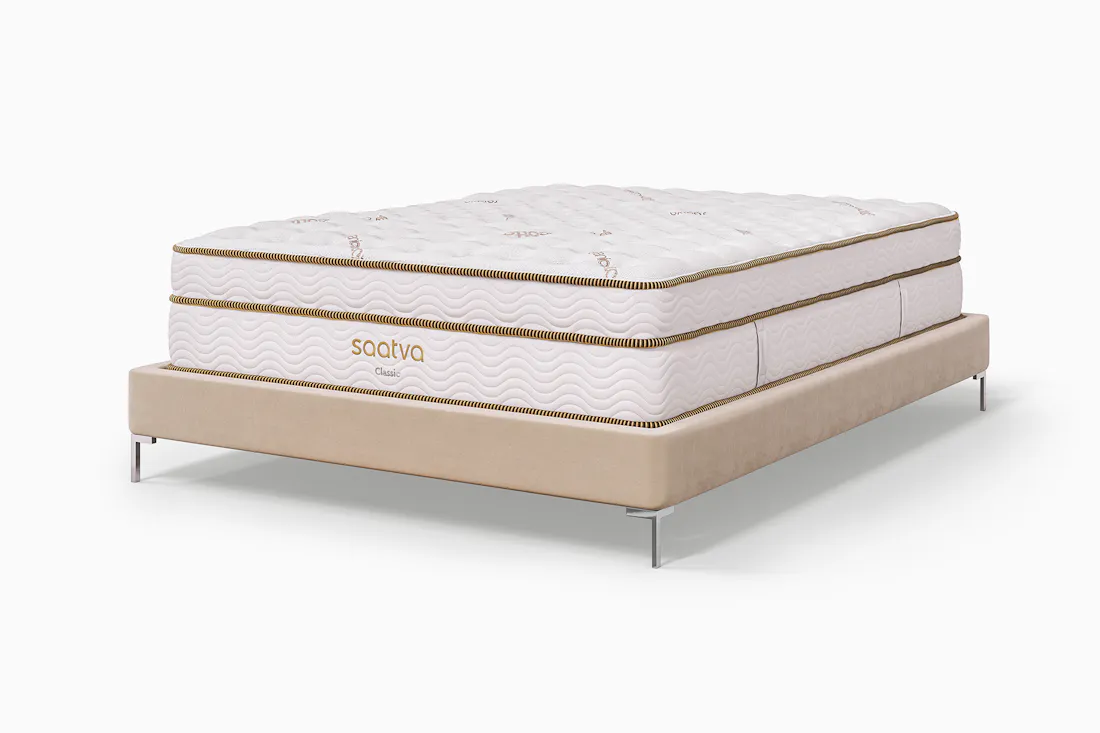
From the best-selling Classic to the adjustable Solaire and the pain-focused Rx; we compared every mattress in Saatva's lineup and matched each one to a sleep style, body type and budget.
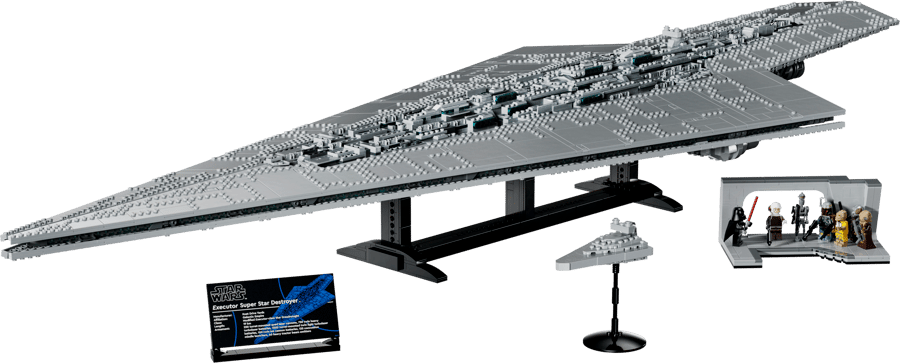
Six thousand pieces or six hundred — we went through LEGO's current 18+ range and picked the sets worth the shelf space, the build time and the money.

Samsung's 2026 range runs from a 165Hz QD-OLED flagship to a Micro RGB LCD and an art panel that hides in plain sight. Here's which one belongs in your room.